
Table of Contents
- Why the Bay Area’s Rain Pattern Makes October the Window You Want
- What Happens When You Power Wash Too Close to the First Storm
- Power Washing by Surface: Siding, Driveway, and Deck
- Where Power Washing Before Rainy Season Makes the Most Sense (and Where It Doesn’t)
- Power Washing Now vs. Waiting Until Spring
- A Walnut Creek Case Study
- Frequently Asked Questions
- Is power washing the same thing as pressure washing?
- Can you power wash stucco siding before the rainy season?
- How often should Bay Area homeowners power wash their house exterior?
- Why does algae keep coming back on my siding every winter?
- What affects the cost of power washing a house before winter?
- What should I ask a power washing company before booking a fall appointment?
Direct Answer: Scheduling power washing before rainy season, ideally in October, gives Bay Area siding, driveways, and decks time to dry and cure before November storms arrive, so dirt does not turn into set-in staining and mold once the rain starts.
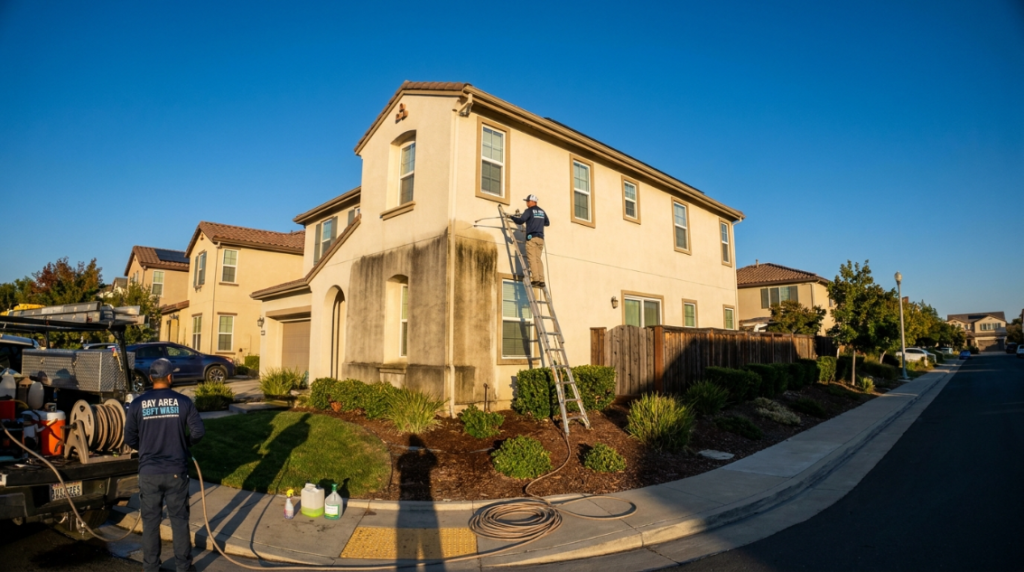
If you’ve ever typed “power washing vs pressure washing” into Google before booking someone to clean your driveway, you’re not alone. Both terms get used interchangeably, and most homeowners just want to know one thing: when is the right time to get it done before the Bay Area’s weather turns.
The answer, for most of the region, is October. You’re past the worst of fire-season dust and pollen, still ahead of the first real storms, and sitting in exactly the kind of dry, mild stretch that makes power washing before rainy season worth doing right instead of rushing. This guide walks through why that window matters, what actually happens if you cut the drying and curing time too short, and how siding, driveways, and decks each need a slightly different approach before the rain arrives.
Why the Bay Area’s Rain Pattern Makes October the Window You Want
The Bay Area doesn’t follow the rest of the country’s four-season calendar. You get a long dry stretch from roughly May through October, then the jet stream drops south and the first real storms move in, usually sometime in November. That gap between the end of summer and the first soaking rain is exactly why power washing before rainy season lands best in October.
September and October also bring what locals call Indian summer: clear skies, warm afternoons, and none of the marine fog that blankets the coast in July. That combination matters for exterior cleaning. Surfaces dry fast, cleaning solutions have time to work, and any sealant applied afterward gets a real curing window instead of a race against the clock.
Wait until December or January and you’re cleaning during the wettest stretch of the year, when those two months together often account for close to half the Bay Area’s annual rainfall. Wait until spring and you’ve already spent an entire winter with dirt, pollen, and algae sitting on your siding and concrete, feeding on every damp week in between storms.

What Happens When You Power Wash Too Close to the First Storm
Most homeowners assume the risk with pre-rain power washing is timing it too early. The bigger risk is usually timing it too late. Cleaned wood, stucco, and concrete need a real drying window before rain hits again, and if you book power washing before rainy season with only a few days of buffer left, you can end up trapping moisture instead of removing it.
Here’s the technical piece most companies skip explaining. Wood decking typically needs 24 to 48 hours of dry weather before it can absorb a sealant properly, and the sealant itself often needs another 24 to 48 hours without rain to cure. Stack those two windows together and a deck cleaned five days before a storm is cutting it close. Stucco and painted siding behave the same way: water pushed behind a cracked seam or an unsealed patch during washing has nowhere to evaporate to once the rain starts stacking on top of it.
A few adjustments prevent most of this:
- Book your power washing before rainy season with at least a 5 to 7 day buffer before the next forecast storm, not just the next dry day.
- Ask whether any sealing or coating work is planned afterward, since that adds its own separate curing window on top of the wash.
- Flag shaded, north-facing walls and fenced-in decks in advance. They dry slower than sun-exposed surfaces, sometimes by a full day or more.
- Reschedule rather than rush if a storm moves up in the forecast. A rushed wash before rain often costs more time later than waiting a week.
Before you book, ask your provider one direct question: how many dry days do you need after washing, and after any sealing, before rain won’t undo the work? A crew with real experience in the Bay Area’s stop-and-start storm pattern should have a specific answer, not a general one.
Power Washing by Surface: Siding, Driveway, and Deck
Not every surface on your property should be cleaned the same way, and this is where a lot of DIY attempts before rainy season go wrong. Each material has its own pressure tolerance and its own drying needs.
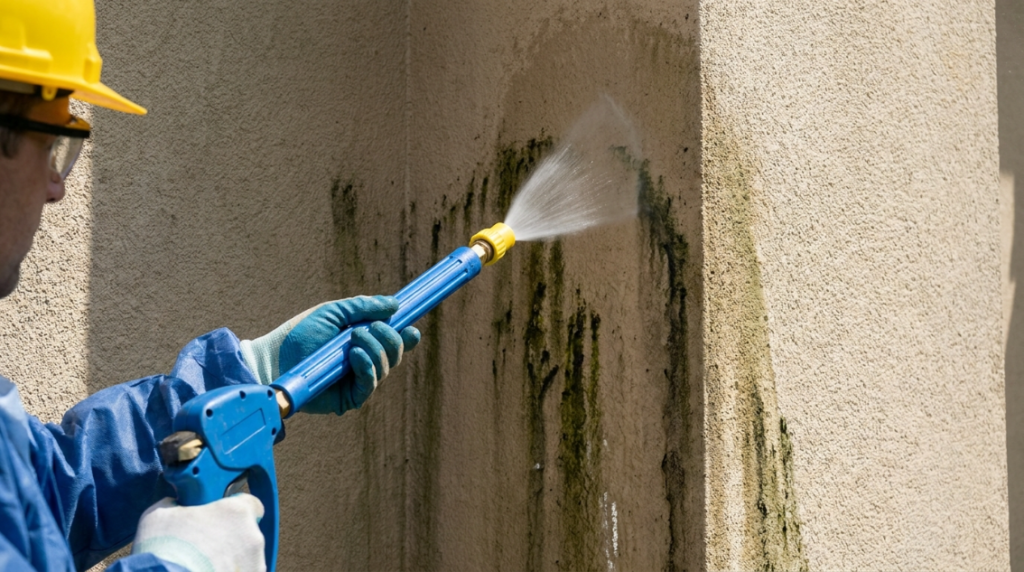
- Siding and stucco: best handled with soft washing, which uses low pressure and a cleaning solution instead of raw force. Common mistake: pointing a high-pressure nozzle directly at stucco, which can crack the finish and push water behind the surface.
- Driveways and walkways: concrete can generally take higher pressure than siding, which is why it’s the surface most homeowners tackle themselves. Common mistake: skipping a sealant reapplication afterward, so the driveway resoils faster once winter rain starts carrying dirt back onto the clean surface.
- Decks and patios: wood needs a gentler touch and a longer drying window, especially before any stain or sealant goes on. Common mistake: sealing the same day as washing, before the wood has actually dried through, which traps moisture under the new coat.
- Fences and outdoor structures: often the most overlooked surface in a pre-rain cleaning. Common mistake: treating the fence line as an afterthought, then finding it’s the first thing to show algae once the wet season sets in, since fence lines tend to sit in more shade than open walls.
Where Power Washing Before Rainy Season Makes the Most Sense (and Where It Doesn’t)
Power washing before rainy season pays off most on properties that collect moisture and shade for months at a time. A shingle-sided home tucked under redwoods in Kentfield holds algae in ways a sun-baked stucco wall in Walnut Creek never will. A fenced side yard in San Rafael that barely sees direct sun through the winter is a near-guarantee for green streaking by February if it goes into the season dirty.
It also makes sense before any fall touch-up work. If you’re planning to repaint trim, patch stucco, or reseal a driveway before winter, cleaning first gives that work a surface it can actually bond to.
It makes less sense in a few situations:
- If a full exterior repaint is already scheduled for next spring, since the surface will be prepped and cleaned again as part of that job anyway.
- If a storm is forecast within the next several days and there’s no flexibility to reschedule.
- If the siding or deck already shows separated boards, cracked stucco, or loose panels. Those need repair first. Washing a compromised surface can push water into gaps that a contractor should seal instead.
Power Washing Now vs. Waiting Until Spring
Here’s how the two timing options actually compare once the season turns.
| Factor | Power Washing Now (Sept-Oct) | Waiting Until Spring |
|---|---|---|
| Drying and curing window | A full week or more of dry, mild weather available before the first storms | Short, unpredictable windows between winter storms; sealants may not fully cure |
| Algae and mold exposure | Surfaces stay drier and cleaner through the wettest months | Four to five months of accumulated moisture before anything gets addressed |
| Scheduling availability | Moderate demand; easier to lock in a preferred date | Peak demand once the weather clears, longer lead times |
| Effort required to clean it | Lighter buildup, more straightforward wash | Set-in algae and grime that’s had all winter to bond to the surface |
A Walnut Creek Case Study
Consider a typical two-story stucco home in Walnut Creek with a shaded north-facing wall and a wood deck off the back of the house. Every winter, the north wall developed dark streaking by January, and the deck’s sealant had started peeling within a year of being applied.
The fix wasn’t a different cleaning method. It was timing. Moving the wash to mid-October, with the deck resealed a full 48 hours after it dried and a week of clear forecast ahead of the first expected storm, meant the sealant had time to cure properly. The following winter, the north wall stayed noticeably cleaner through March, and the deck sealant held through the whole wet season instead of failing early.
This kind of before-and-after difference is common enough that we’ve seen it repeat across shaded properties from the North Bay to the Peninsula. It’s rarely about needing a stronger wash. It’s almost always about giving the work enough dry time to actually hold.
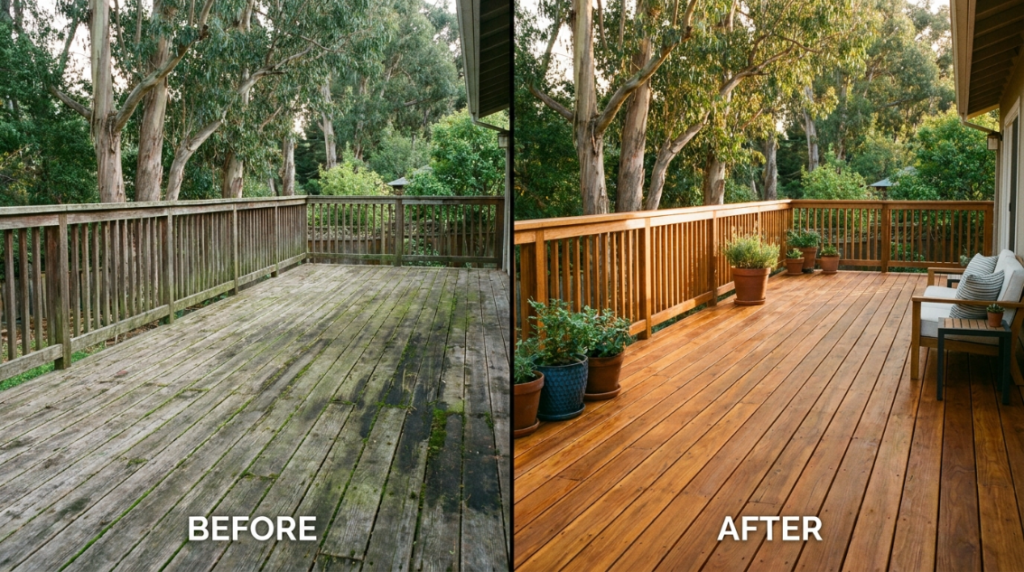
Homeowners who’ve booked us for other exterior work often mention on Google and Yelp how straightforward scheduling is and how much of a difference they notice once the crew is done. You can browse recent feedback on our Google Business Profile, read more homeowner comments on our Yelp page, or see before-and-after photos on our Instagram.
Frequently Asked Questions
Is power washing the same thing as pressure washing?
Not exactly. Pressure washing uses regular-temperature water. Power washing adds heat, which cuts through grease and set-in grime faster. For most Bay Area homes, technique matters more than water temperature alone.
Can you power wash stucco siding before the rainy season?
Yes, but stucco does better with soft washing than high-pressure blasting. High pressure can crack it or push water behind the surface. Soft washing uses low pressure and a cleaning solution to remove algae safely instead.
How often should Bay Area homeowners power wash their house exterior?
Once a year is the standard baseline, timed for early fall before rainy season arrives. Homes with heavy shade or a damp, north-facing wall often need a wash every 6 to 12 months instead.
Why does algae keep coming back on my siding every winter?
Algae needs moisture, shade, and organic material to grow, common conditions on many Bay Area walls each winter. A wall that stays damp after storms gives algae what it needs. Cleaning treats the symptom; trimming nearby vegetation addresses the cause.
What affects the cost of power washing a house before winter?
Cost depends on property size, how many surfaces are involved, how much buildup has accumulated, and whether soft washing is needed for delicate areas. Ask for a walk-through quote for an estimate specific to your property.
What should I ask a power washing company before booking a fall appointment?
Ask how they handle stucco and painted siding, since the wrong pressure can cause damage. Ask how many dry days they recommend after washing and after any sealing work, and whether technique changes by surface.
Get Ahead of the Rain This October
October gives Bay Area homeowners a real, dry window to handle exterior cleaning before the weather turns unpredictable. Booking power washing before rainy season now, rather than waiting for the first storm to force the issue, means less set-in grime, a real curing window for any sealant work, and one less thing to worry about once December’s rain settles in.
If your siding, driveway, or deck is due for a wash, reach out to our team to get on the schedule before the season fills up. Our power washing service covers siding, driveways, decks, and fencing across the region, and if you’re not sure whether we cover your neighborhood, the full list is on our areas we serve page.