
Table of Contents
- Is It Safe to Open Your Windows After a Smoky Day?
- Why the Smoke Smell Leaving Doesn’t Mean the Air Is Clean
- Why Wildfire Smoke Gets Into a Closed-Up House in the First Place
- Cleaning Up Wildfire Smoke Smell Bay Area Homes Trap, Surface by Surface
- DIY Cleanup vs. Calling a Professional After a Smoky Day
- How Long Does Wildfire Smoke Smell Last Inside a House?
- What Smoke Cleanup Looks Like in a Real Bay Area Home
- Is Wildfire Smoke Smell Removal Different From Cigarette Smoke Cleanup?
- Can I Clean Up Smoke Residue Myself, or Do I Need a Professional?
- How Often Should I Change My HVAC Filter During Bay Area Fire Season?
- Why Does My House Still Smell Like Smoke Days After the Air Quality Improved?
- What Affects the Cost of Smoke Odor Cleanup?
- What Should I Ask a Cleaning Company Before Hiring Them for Smoke Odor Removal?
Direct Answer: Clearing the wildfire smoke smell Bay Area homes hold onto after a smoky day means waiting for a truly clean AQI before airing out, wiping hard surfaces with a mild solution, treating fabric and upholstery separately, and swapping in a MERV 13 HVAC filter.
You just lived through a Spare the Air day, and the sky over the Bay Area finally looks normal again. But walk back into your living room and that campfire smell is still there, clinging to the couch cushions and the curtains like it moved in. You check an app like PurpleAir or AirNow, see the numbers back in the “good” range, and wonder why your house didn’t get the memo.
That gap between what the air quality index says and what your nose says is the whole story here. Wildfire smoke doesn’t just pass through a house. It settles into fabric, hides in HVAC ductwork, and leaves a residue that keeps releasing odor long after the smoke plume itself has drifted out toward the Delta or off the coast. This guide covers three things: when it’s actually safe to open your windows again, how to clean each surface in your home differently, and why the smell disappearing, or sticking around, doesn’t always match what’s still in your air.
Whether the fire behind the haze burned in Sonoma, the East Bay hills, or hundreds of miles north in Oregon, the cleanup inside your home looks about the same. If you’d rather hand this off entirely, you can reach out to us anytime instead of tackling it room by room. For now, here’s where most people get the first step wrong.
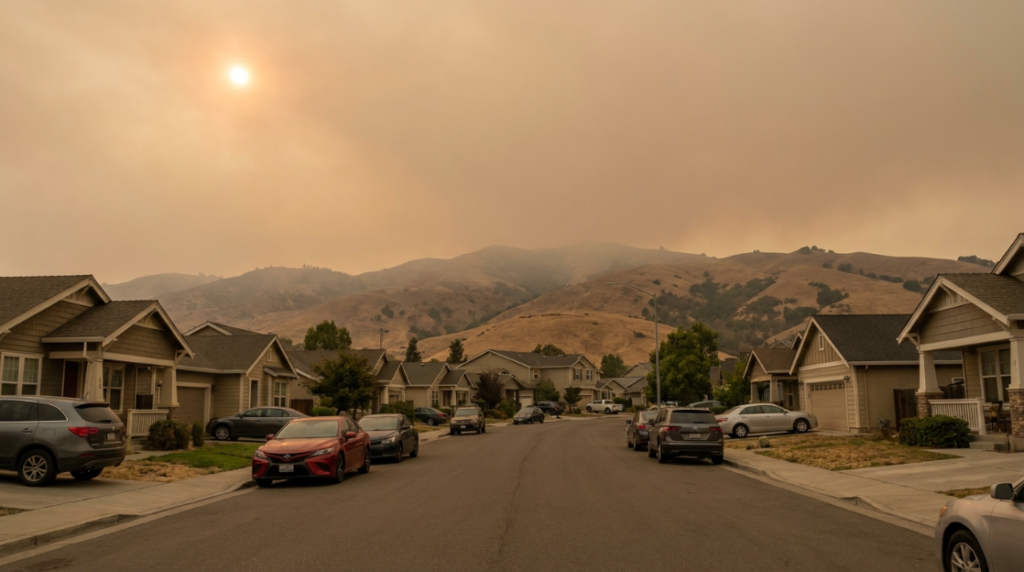
Is It Safe to Open Your Windows After a Smoky Day in the Bay Area?
Only once your local AQI reading has held in the “good” or “moderate” range for a few hours, not the moment the sky looks clearer. Bay Area fog can trap smoke compounds close to the ground even after a plume has visually thinned out, so a hazy-looking sky and a genuinely clean AQI reading are not the same thing.
Check a monitor before you touch a window latch. The EPA’s Fire and Smoke Map at fire.airnow.gov and neighborhood PurpleAir sensors both update close to real time, and either one beats guessing from your porch. Once the numbers cooperate, open windows on opposite sides of the house rather than just one, and run ceiling fans on high for fifteen to twenty minutes to pull stale air out fast.
Checking a monitor takes about thirty seconds. Airing out a house on a bad AQI day, on the other hand, can undo a full afternoon of cleaning by pulling fresh particulate straight back onto the surfaces you just wiped down.
Why the Smoke Smell Leaving Your House Doesn’t Mean the Air Is Clean
Because odor and particulate matter clear on two different timelines, and losing one doesn’t mean you’ve lost the other. The compounds that give wildfire smoke its campfire smell break down chemically within hours to about a day. The fine particulate that rode in on that smoke, the part small enough to lodge in fabric fibers and HVAC ductwork, sticks around much longer.
That’s the part most people miss. A house can smell clean while dust and residue are still sitting in the couch cushions, and a house can still smell faintly smoky days after the particulate count outside has actually dropped. Relying on your nose alone tells you about the gases in the air right now, not about what settled into your carpet three days ago. Some industry researchers describe this as two separate clocks: a fast one for airborne particles and gases, and a much slower one for residue that has already settled on surfaces and inside ductwork.
A few things help close that gap:
- Vacuum fabric surfaces with a HEPA-filter vacuum instead of dry dusting, which just launches settled particles back into the air
- Wash or steam anything washable that was exposed, including curtains and throw pillows
- Swap the HVAC filter even if the house smells fine, since residue can keep circulating through ductwork
- Wipe hard surfaces you’d normally skip, like the tops of cabinets and ceiling fan blades, where fine dust settles unnoticed
Before hiring anyone for smoke cleanup, ask a straightforward question: does their process address the odor, the embedded particulate, or both? A company that only sprays a deodorizer is solving the smell you can smell, not the residue underneath it.
Why Wildfire Smoke Gets Into a Closed-Up House in the First Place
Because a house is never as sealed as it feels. Smoke works its way in through the small gaps most homeowners never think about: door thresholds, window frames, bathroom and kitchen exhaust fans venting to the outside, and fresh-air intakes built into some HVAC systems.
It also hitches a ride on you. Ash and fine particulate settle on jackets, shoes, and hair during a walk outside, then come off the moment you’re back in the living room. Pets track in even more of it, since fur holds onto particulate the same way fabric does.
None of this means closing up the house was pointless. It just means “closed” cuts down exposure, it doesn’t eliminate it, which is part of why cleanup afterward still matters even if you stayed inside the whole time.
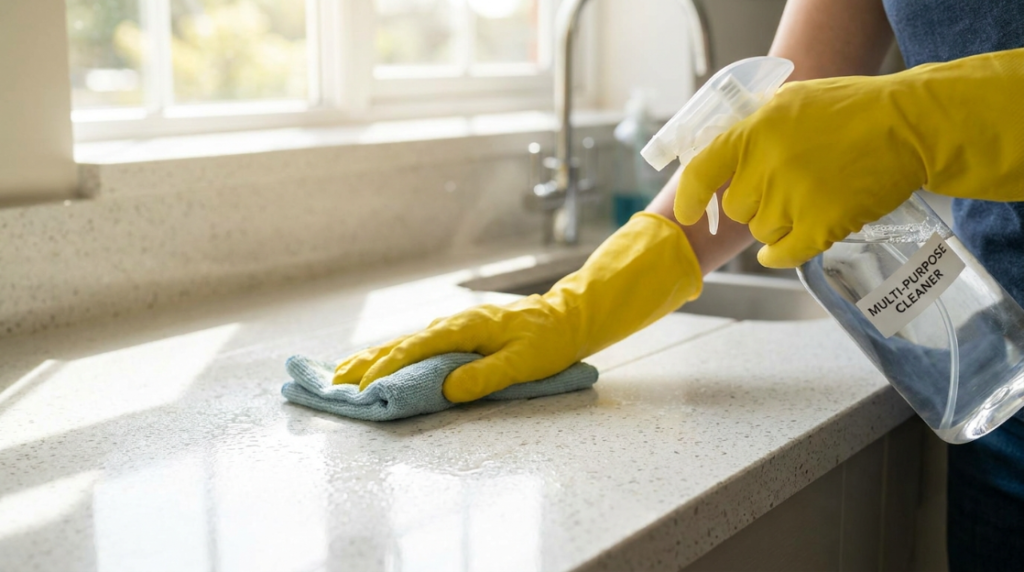
Cleaning Up Wildfire Smoke Smell Bay Area Homes Trap, Surface by Surface
Each surface in your home holds onto wildfire smoke smell differently, so a single spray-and-wipe pass misses most of it. Breaking the job down by surface type is what actually gets the residue out instead of just moving it around.
- Hard Surfaces (counters, cabinets, walls, window sills): wipe down with a solution of white vinegar and warm water, roughly one part vinegar to one part water. The mild acid cuts through the oily film smoke leaves behind. Common mistake: skipping ceiling fan blades and the tops of cabinets, where fine dust settles first and gets missed for weeks.
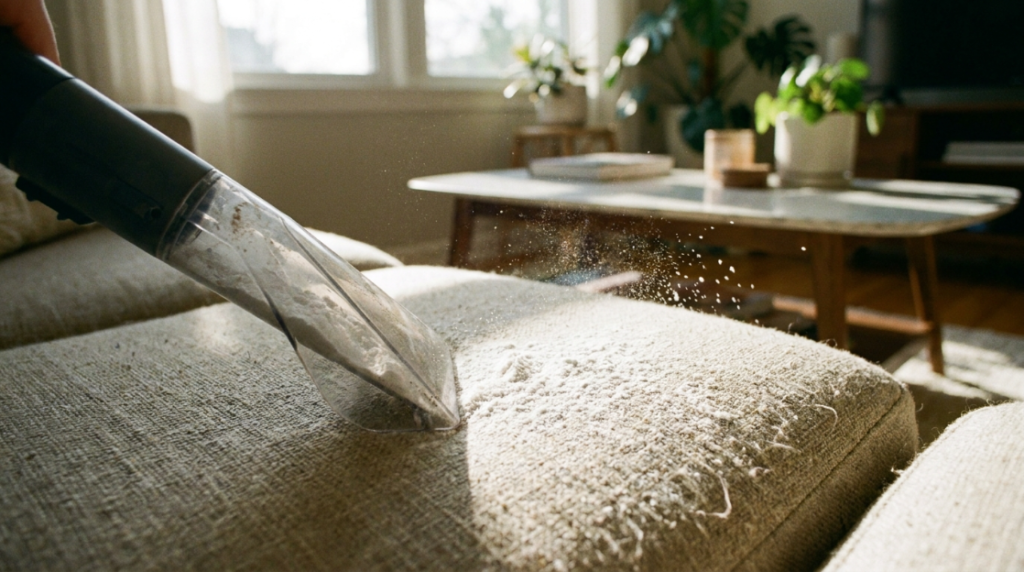
- Fabric & Upholstery (sofas, curtains, mattresses, area rugs): sprinkle baking soda liberally, let it sit for at least four hours, overnight for heavier exposure, then vacuum thoroughly with a HEPA-filter vacuum. Anything machine washable should go through a cycle with a cup of white vinegar added to the detergent. Common mistake: reaching for a fabric spray like Febreze first, which masks the smell without pulling the residue out of the fibers underneath.
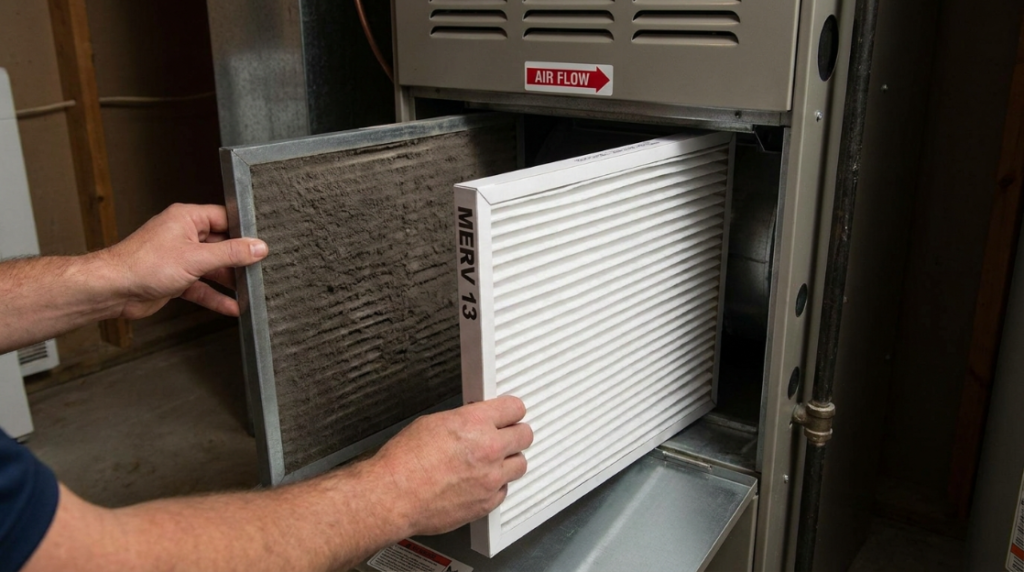
- HVAC Filter: swap in a MERV 13 filter, the rating the EPA recommends for filtering out fine wildfire particulate, and set the fan to run continuously rather than only kicking on with heating or cooling. Check it weekly during an active smoke event and replace it as soon as it looks dark, which is often faster than the usual sixty to ninety day cycle. Common mistake: waiting for the normal replacement schedule instead of watching how the filter actually looks.
Ready to get your home breathing easier? Reach out to our team and we’ll walk you through what a full smoke cleanup visit covers for your specific space.
DIY Cleanup vs. Calling a Professional After a Smoky Day
Light exposure from a single Spare the Air day is usually a DIY job. Multiple smoky days in a row, or a fire that burned close enough to leave visible ash, usually isn’t.
| Situation | What You Can Handle Yourself | When to Call a Professional |
|---|---|---|
| One smoky day, mild odor, no visible ash | Vinegar wipe-down, baking soda on upholstery, HVAC filter swap | Rarely needed |
| Several smoky days in a row, smell noticeable in multiple rooms | Same steps, repeated and more thorough, plus washing soft furnishings | Worth a call if the smell doesn’t fade within a week of cleaning |
| Visible ash indoors, or a fire that burned nearby | Basic surface wipe-down while you wait | Recommended, since ash and deep residue in padding and ductwork usually need extraction equipment DIY tools don’t have |
Time is the real difference between the two columns. A DIY pass on a lightly smoky day takes an afternoon. A house that’s absorbed several days of heavy smoke can take a professional crew a full day to get through properly, since the residue has had time to work into padding and ductwork that a surface clean can’t reach.
How Long Does Wildfire Smoke Smell Last Inside a House?
Light exposure from a single smoky day usually clears within a few days once you’ve cleaned hard surfaces, treated fabric, and swapped the HVAC filter. Heavier exposure, the kind that comes from several smoky days in a row or a fire that burned close enough to leave ash, can linger for two to three weeks if the fabric and ductwork aren’t addressed directly.
Fresh air alone speeds up the airborne portion, but it does nothing for residue that’s already settled into your couch or your ducts. That’s why the surface-by-surface approach above matters more than just cracking a window and waiting.
What Smoke Cleanup Looks Like in a Real Bay Area Home
A family in Walnut Creek recently reached out to us three days after a nearby grass fire had cleared, frustrated that their living room still smelled like a campfire even though the AQI had returned to normal. The smoke itself had come and gone in an afternoon, but it had settled into a sectional sofa and a wool area rug before anyone thought to close the windows.
The fix wasn’t complicated, it just required treating each surface on its own terms. Baking soda and a thorough HEPA vacuum pass handled the sofa. The rug needed a deeper extraction, since wool holds onto odor compounds more stubbornly than synthetic fibers. A fresh MERV 13 filter took care of what was still circulating through the HVAC system. Within two days, the smell was gone, not just covered up.
Frequently Asked Questions
Is Wildfire Smoke Smell Removal Different From Cigarette Smoke Cleanup?
Not by much. Both involve fine particulate settling into fabric, walls, and HVAC systems, and both respond to the same core toolkit: vinegar on hard surfaces, baking soda on fabric, and a fresh HVAC filter. Wildfire smoke usually carries more ash, while cigarette smoke leaves a stickier residue on hard surfaces.
Can I Clean Up Smoke Residue Myself, or Do I Need a Professional?
Most single-day exposure from a Spare the Air alert is manageable yourself with the steps above. If the smell is still noticeable after a week of thorough cleaning, or a fire burned close enough to leave visible ash, that usually means residue has worked into padding or ductwork that needs extraction equipment a household vacuum doesn’t have.
How Often Should I Change My HVAC Filter During Bay Area Fire Season?
Check it weekly once smoke is actively affecting your area, rather than waiting for your usual sixty to ninety day cycle. The EPA recommends replacing a filter as soon as it looks dark or dirty. A MERV 13 filter can clog within thirty days under heavy smoke, so keep a spare or two on hand during fire season.
Why Does My House Still Smell Like Smoke Days After the Air Quality Improved?
Because outdoor odor compounds and indoor particulate residue clear on different timelines. The AQI measures what’s happening outside right now, not what already settled into your carpet or ductwork days earlier. That residue keeps releasing odor until it’s physically cleaned out.
What Affects the Cost of Smoke Odor Cleanup?
The biggest factors are how many rooms were affected, how porous the materials are (wool rugs and down cushions hold odor longer than synthetic fabric), and whether it was a single light event or several days of heavier exposure. A walkthrough is the most reliable way to know what your situation involves.
What Should I Ask a Cleaning Company Before Hiring Them for Smoke Odor Removal?
Ask whether their process treats embedded particulate in fabric and ductwork, not just the smell in the air, and what equipment they use on upholstery and rugs. It’s also worth asking how they handle rooms with different exposure levels, since a room near an open window usually needs more work than a closed one.

Get Your Bay Area Home Smelling Clean Again
A smoky day doesn’t have to mean weeks of a lingering campfire smell. Check the AQI before you air out, clean hard surfaces, fabric, and your HVAC filter as three separate jobs, and remember that the smell disappearing isn’t the same as the residue actually being gone.
Our crews handle the wildfire smoke smell Bay Area residents deal with every fire season, from a single hazy afternoon to homes that took on smoke for days at a time. Clients on Yelp and Google consistently point to how thorough our crews are about the details other cleanings skip, like ceiling fans and the tops of cabinets. If your home is still holding onto that smoky smell, get in touch with our team and we’ll put together a plan for your space. For a deeper reset beyond a single smoke event, our guide on deep cleaning explains what a full seasonal refresh includes, and you can see every neighborhood we serve on our areas we serve page.